Water Coming Through From the Unit Upstairs
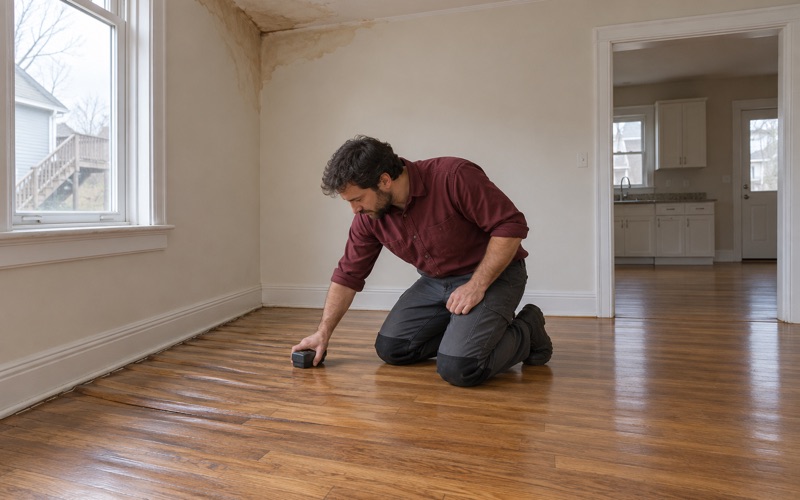
A leak from the apartment above usually shows up as stained ceiling plaster first and cupped boards second. We find where the water entered the floor, dry and meter it, and only then decide which boards are lost, because many cupped boards flatten again once the moisture is gone.
Cupping and Buckling After a Burst Pipe or Appliance Leak
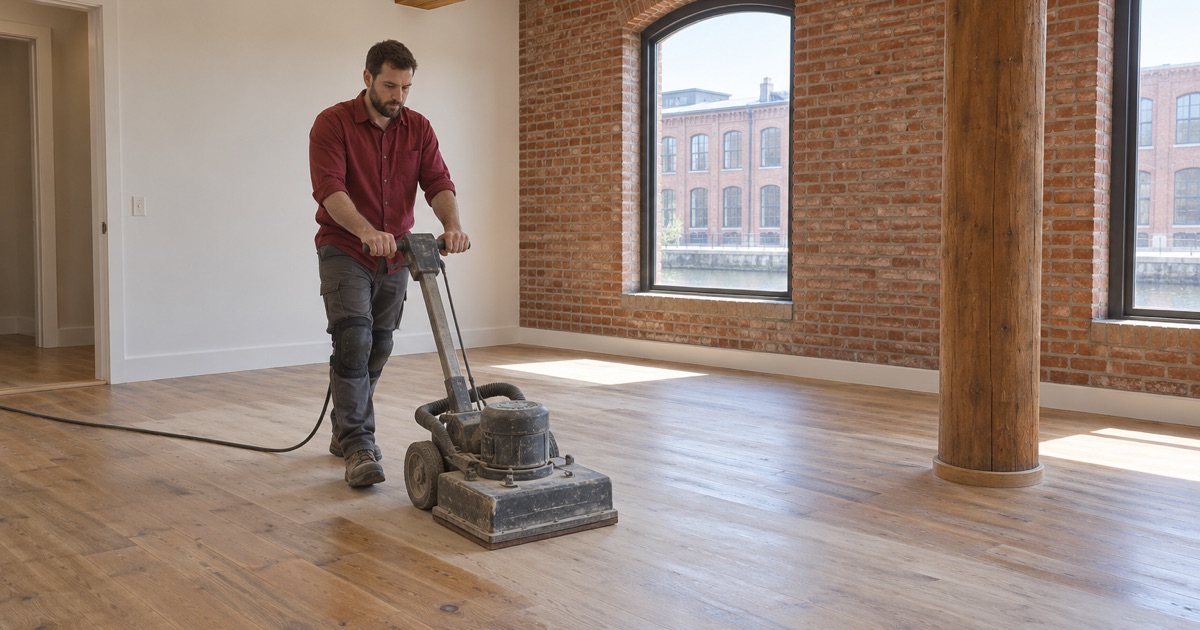
Cupping is when board edges rise higher than the centers, and buckling is when the floor lifts off the subfloor entirely. We dry the floor, take moisture readings across the room and replace only boards that have split, crushed or pulled their fasteners. Sanding a cupped floor before it dries flattens the tops and leaves the boards crowned once the wood settles.
Water in a Basement or Lower Level After a Storm
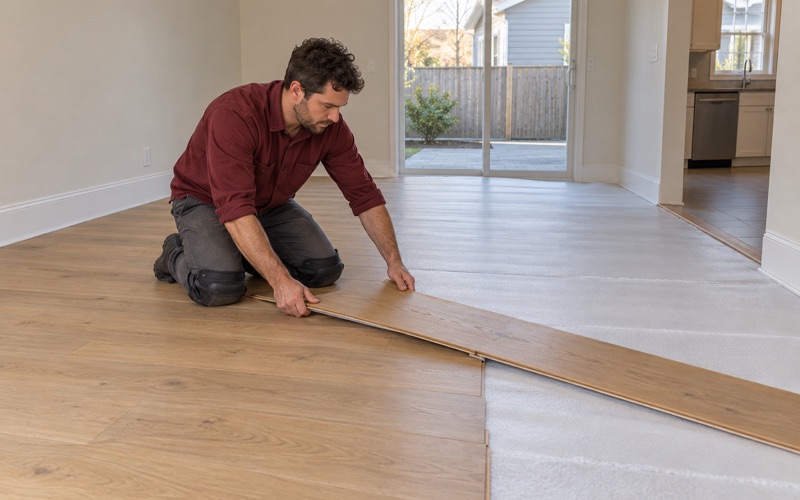
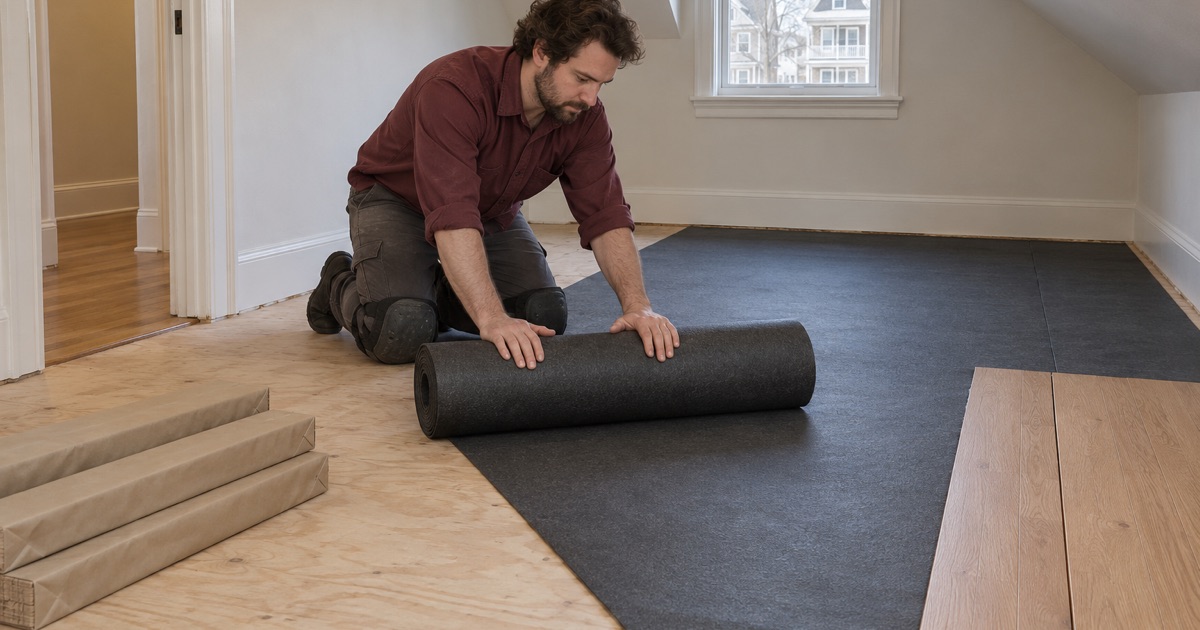
Wood below grade sits closest to groundwater, and a storm can leave it swollen or stained. We check the slab and the subfloor for moisture before any repair, and for rebuilt basement floors we usually steer owners toward engineered wood over a proper vapor retarder rather than solid boards.
Winter Gaps Once the Heat Comes On
Winter gaps open when heating dries the air and the boards shrink across their width, then close again in humid summer. We explain what is seasonal and what is not before anyone fills or replaces boards, because filling a seasonal gap in January can crush the board edges by July.
Bouncy, Spongy or Shaking Upper-Story Floors
A bouncy floor usually points to the framing or subfloor underneath, not the hardwood on top. We check the subfloor, fasteners and joist span where we can see them, refasten what is ours to fix, and refer structural work to a carpenter or engineer rather than sanding over it.
Sloping Floors in an Old Two-Family or Triple-Decker
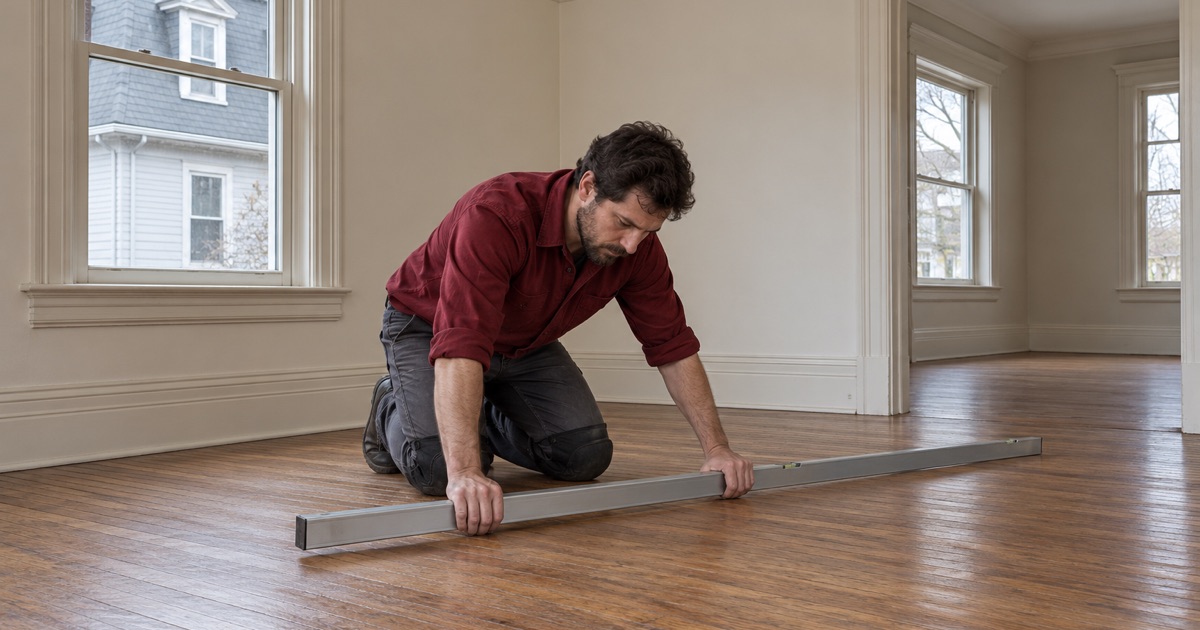
A sloping floor in an older multi-family house is often decades of settling rather than a new failure. We tell you what the slope means for a refinish or new installation, and if it points to a structural problem, we stop and say so before covering it with a new finish.
Black Pet Urine Stains That Reached the Subfloor
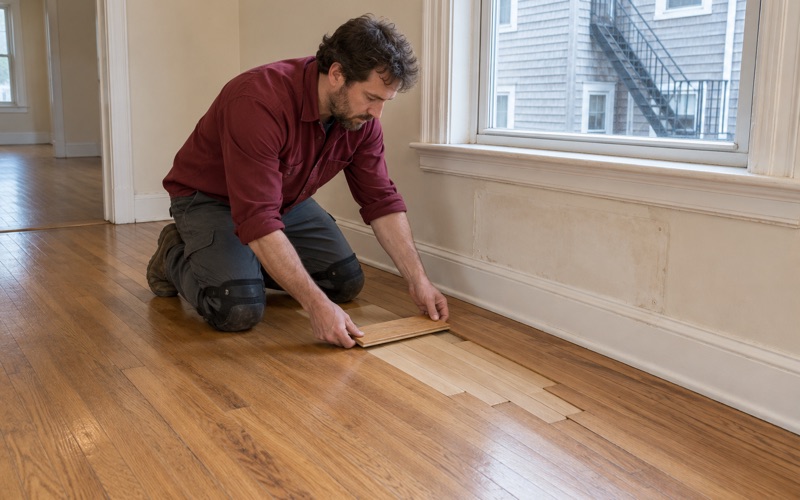
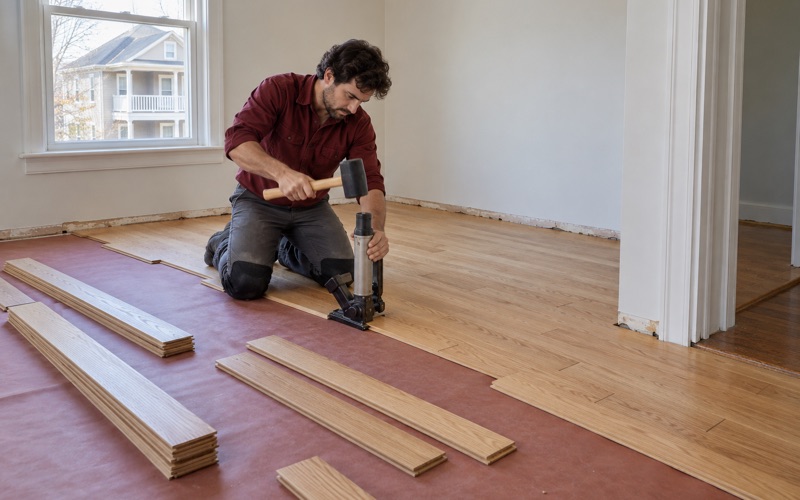
Pet urine stains that have turned black have usually soaked through the board and sometimes into the subfloor. Sanding rarely removes them, so we cut out the affected boards, check the subfloor for odor and damage, and weave in matching boards before the whole room is refinished.
Small Holes and Fine Powder From Wood-Boring Beetles
Round exit holes and little piles of flour-like powder can mean powderpost beetles or old house borer in the floor or the framing beneath it. We point out the signs, recommend a pest professional confirm whether the activity is current, and replace damaged boards only after the infestation is dealt with.
Squeaks, Popping and Loose Floorboards
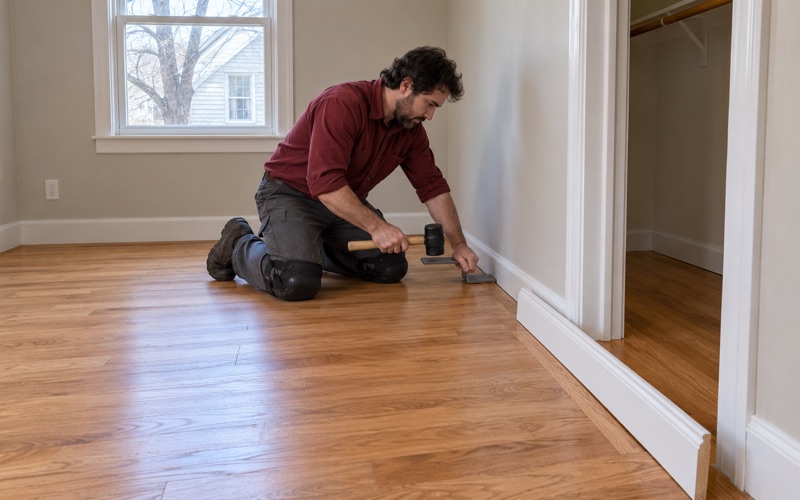
Squeaks usually come from boards rubbing against loose nails or a subfloor that has pulled away from the joists. We refasten from above or below where it is reachable and replace boards whose tongue and groove has broken, so the repair holds rather than coming back next season.
Worn, Cracked or Loose Stair Treads
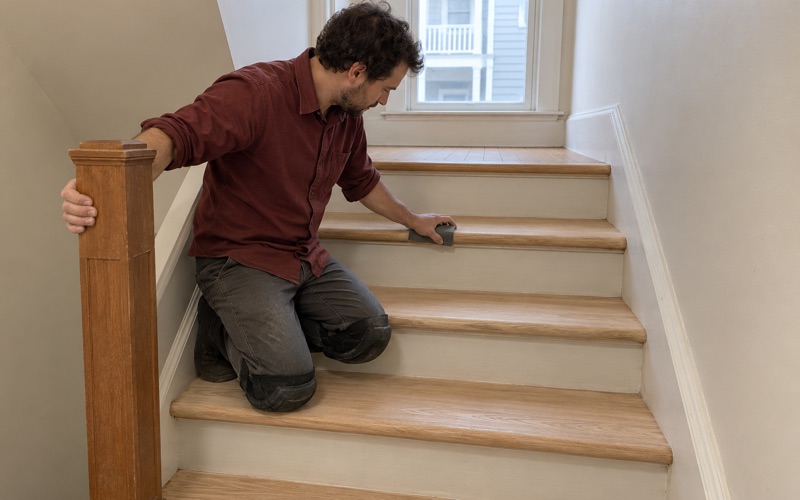
Stair treads take more traffic per square foot than any floor in the house, and cracked or loose treads are a safety problem. We reattach, repair or retread individual steps and refinish the stair nosing and risers so the staircase matches the floors around it.