
Lawrence Wood Flooring has done rental property floor refinishing in Lawrence, MA for 20+ years, serving surrounding cities including Methuen, Andover, Haverhill, Lowell, Boxford. We work for landlords and property managers with single units, two-families, triple-deckers and small apartment buildings, and the work is built around one fact: an empty unit costs money every day it sits.
That is why rental floors are scheduled around the move-out and move-in dates, not around our convenience. We look at the floor as soon as you know a tenant is leaving, tell you whether it needs a full sanding, a screen and recoat or a few repairs, and plan the work to fit the gap between tenants.
Every rental estimate is written and itemized, room by room. Ordinary wear and real damage are listed separately, which is the record a landlord needs when the question of the security deposit comes up.
Scheduling Around the Turnover
Planning Before the Unit Is Empty
The best time to look at a rental floor is before the tenant moves out, or on the day they do. We assess the floor, give you the options and book the work so it starts as soon as the unit is empty.
Where painters or other trades are also working in the unit, we coordinate the order so the floor is finished last and is not scratched by ladders and drop cloths afterward.
Full Sanding or Screen and Recoat
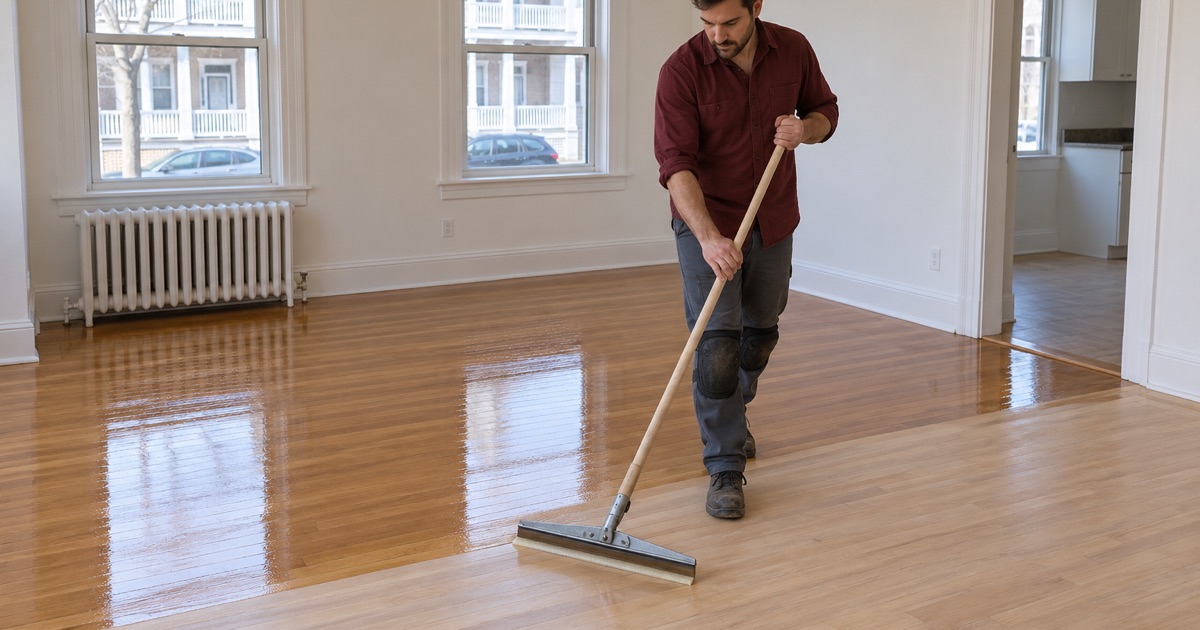
A full sanding takes the floor to bare wood and removes scratches, stains and worn-through areas, but it needs more days for coats to dry and cure. A screen and recoat lightly abrades the existing finish and adds a fresh coat, and it fits a much shorter window.
We tell you which the floor actually needs. Recoating a floor with gray traffic lanes only seals in the damage and leaves you paying for a full sanding at the next turnover.
Repairs in the Same Visit
Rental floors often need a few repairs: a pet-stained section by a door, cracked boards near a radiator or squeaky boards in a hallway. We replace and weave in boards before sanding, so repairs and refinishing are done in one visit rather than two.
Old radiator holes, loose stair treads and gaps along a wall where a tenant’s furniture dragged are the kinds of small fixes that make a unit show better. We list each one on the estimate with its own price, so you can decide which to do now and which can wait.
Itemized Estimates and Security Deposits
Separating Wear From Damage
Under Massachusetts rules, a landlord who deducts from a security deposit generally needs to provide an itemized list of damage, supported by documentation such as written estimates. Normal wear and tear is not the tenant’s to pay for.
Our estimates keep those categories apart. Light scratches, dulled finish and traffic lanes are listed as wear; deep gouges, large pet urine stains or water damage from neglect are listed as damage, each with its own line and cost.
Photos and Notes
Along with the estimate, we note the condition of each room and can document stained or damaged areas before work starts. That record is useful if a former tenant questions a deduction, and it helps you track how the floors are holding up from one tenancy to the next.
Properties Across the State Line
Landlords with units in both Massachusetts and New Hampshire deal with two sets of rental rules. The floor work itself does not change, but we confirm which state the unit is in so the estimate fits the paperwork that state’s rules call for.
Working in Occupied Buildings
One Unit at a Time
In two-family and three-family houses, the other tenants still live in the building while one unit is being refinished. We seal the unit we are working in, contain dust with dust collection and HEPA vacuums, and keep shared stairways and hallways clear.
Noise and Working Hours
Drum sanders are loud, and the neighbors in a shared building notice. We schedule the loudest work for reasonable hours and can give you a timeline to share with the other tenants, so the work does not become a complaint.
Finishing coats are quiet, but they bring some odor and need the room closed off while they dry. Waterborne finishes keep that odor low, which matters when tenants on the next floor share a stairway or ventilation with the unit being worked on.
Lead-Safe Considerations
Many rental properties in this area are older buildings, and Massachusetts runs its own lead-safe renovation rules for homes built before 1978. We ask for the build year and look for painted thresholds, stairs and trim before sanding, so the job is set up properly from the start.
Finishes and Floors That Last Between Tenants
Durable, Fast-Drying Finishes
Rentals benefit from a waterborne polyurethane, which dries quickly and has low odor, so the unit can be shown and rented sooner. A satin or matte sheen hides everyday scratches and scuffs far better than gloss.
We also suggest felt pads for any furniture the unit is rented with and mats at the entry doors. Those two small things keep grit and chair legs from wearing through a fresh finish before the first tenancy is over.
Replacing Carpet With Hardwood
Many landlords replace worn carpet with hardwood at turnover, because a wood floor can be refinished for years instead of being torn out and replaced. Where there is oak under the carpet, refinishing it is usually less expensive than new flooring.
Keeping the Floors in Rotation
A rental floor that is recoated every few tenancies may never need a full sanding. We can keep a record of when each unit was last refinished or recoated, so you can plan floor work across your properties instead of reacting at every move-out.
- 20+ Years on Wood Floors
- Itemized Written Estimates
- Old Pine and Oak Work