
Lawrence Wood Flooring specializes in pine floor refinishing in Lawrence, MA, serving surrounding cities including Methuen, Andover, Haverhill, Lowell, Boxford. In 20+ years of floor work, the most common mistake we see on old pine is a crew sanding it the way they would sand oak, which leaves a rippled floor with the soft grain scooped out.
Pine is a softwood. Eastern white pine, southern yellow pine and heart pine all behave differently from red oak strip flooring, and each one needs its own approach to sanding, repair and finish. We refinish pine with that in mind, so the floor ends up smooth and sealed while keeping the age and character that make it worth saving.
Types of Pine Floors
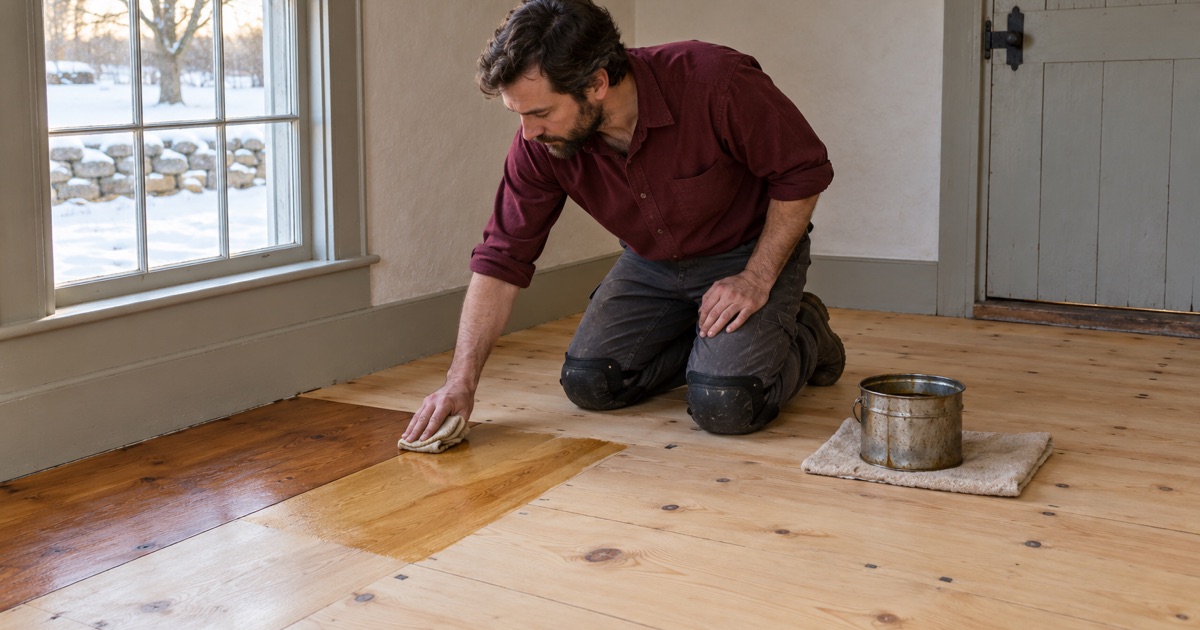
Eastern White Pine
Eastern white pine is soft, light in color and often found in wide boards in older houses, particularly on upper floors and in older sections of a home. It dents easily and wears into hollows at doorways and along traffic paths.
We sand white pine with light passes and a fine finishing grit, keeping as much of the original surface as we can. The goal is a smooth, sealed floor, not one sanded so deep that the boards are thinned for no reason.
Southern Yellow Pine
Southern yellow pine is harder than white pine, with strong contrast between its soft and hard growth rings. That contrast is what gives it its striking grain, and it is also why aggressive sanding leaves a washboard surface.
The soft bands sand away faster than the hard ones, so we keep the sander moving and use grits that cut evenly. Yellow pine often ambers to a warm honey color under finish, which many owners want to keep.
Heart Pine
Heart pine comes from the dense center of old-growth longleaf pine and is harder and more resinous than other pine. It has a deep red-brown color and is valued highly, so we treat it gently.
Resin in heart pine can gum up sandpaper and affect how some finishes bond. We test the finish on a small area first so the full coat bonds and dries properly.
Repairs Before Refinishing
Wide Gaps and Seasonal Movement
Wide pine boards move more with the seasons than narrow oak strips, so gaps open in winter when heat dries the air and close in humid summer. Filling a seasonal gap in winter can crush the board edges once the wood swells again.
Gaps that stay open year-round can be filled or fitted with thin slivers of matching wood. We show you which gaps are seasonal and which are permanent before deciding how to treat them.
Raised Nails and Loose Boards
Old pine floors were often fastened with cut nails, and over time those nails can rise above the surface or lose their grip. Raised nail heads are set below the surface before sanding, because they tear sandpaper and can scar the floor.
Loose or squeaking boards are refastened, and boards split along the grain are replaced. That way the finish goes onto a floor that is solid underfoot.
Soft Spots, Splinters and Damaged Boards
Pine wears into soft spots near doorways and sinks, and old boards can splinter along the grain. We repair or replace damaged boards before sanding, using reclaimed pine or boards borrowed from a closet so the patch matches the aged wood around it.
Sanding and Finishing Pine
A Gentler Grit Sequence
Pine needs a different grit sequence than oak, with less aggressive sanding and more attention to even pressure. We set the sanders for softwood flooring and keep them moving, so the soft grain is not scooped out into ripples.
The edges and corners are sanded with care as well. An edger used heavily on pine leaves visible dips around the perimeter of the room.
Color and Stain on Pine
Pine often takes stain unevenly, turning blotchy where the soft grain absorbs more color. Many owners choose a clear finish, which lets the pine age to its natural warm tone.
Where a stain is wanted, we lay stain samples on a sanded patch of your floor, in your own light, before committing. A wood conditioner or a lighter stain can help even out the color.
Finishes for Pine
A durable polyurethane gives pine the most protection against wear and moisture. Waterborne polyurethane stays lighter in color, while oil-modified polyurethane deepens the warm amber tone.
Hardwax oil gives pine a softer, low-sheen look and can be spot-repaired without sanding the whole floor, but it needs periodic maintenance. We help you choose based on the look you want and how the room is used.
Living With a Refinished Pine Floor
What to Expect
A refinished pine floor will be smooth, sealed and even in color, but it will still show dents and marks over time, because pine is soft. Many owners see that as the floor’s character rather than a flaw.
Felt pads under chairs and tables, rugs in the busiest paths and mats at exterior doors make a real difference on softwood. Grit tracked in from outside is what wears pine fastest, and a little prevention keeps the finish intact for years.
Recoating Instead of Sanding Again
Because every full sanding removes some of a soft floor, pine benefits from being recoated before the finish wears through. A screen and recoat every few years refreshes the surface without taking more wood off the boards, which helps an old pine floor last for another generation.
Pine in Older and Multi-Family Homes
Pine floors are common in the upper floors of older two- and three-family houses, where they may have been painted or covered for years. Painted pine in homes built before 1978 is checked for build year before sanding, because Massachusetts runs its own lead-safe renovation rules for disturbing paint.
In a two-family, we refinish the pine on one floor while the other household stays put, keeping the shared stairway usable. Holes where radiators once stood are common in these floors, and we patch them with matching pine woven into the boards rather than a square plug.
- 20+ Years on Wood Floors
- Itemized Written Estimates
- Old Pine and Oak Work