
Lawrence Wood Flooring installs and repairs engineered hardwood flooring in Lawrence, MA, serving surrounding cities including Methuen, Andover, Haverhill, Lowell, Boxford. With 20+ years on wood floors, we put engineered boards where solid wood tends to struggle and help you pick one that will last in the room it is going into.
Engineered hardwood is real wood on top, bonded to a layered core that resists swelling and shrinking. That stability makes it a strong choice for basements, rooms over a slab, condo units with association floor rules and older houses where the humidity swings hard between a dry heated winter and a damp summer.
Not every engineered product is the same, though. The thickness of the wear layer, the core, the finish and the installation method all change how the floor performs and whether it can ever be refinished, so we walk you through those choices before anything is ordered.
Where Engineered Hardwood Makes Sense
Basements and Other Below-Grade Rooms
Solid hardwood below grade sits right above concrete that can carry moisture up from the ground, and it tends to cup or buckle within a season or two. Engineered boards handle that setting far better because their layered core does not move as much when moisture changes.
We still test the slab before any installation and lay a vapor retarder where the product calls for one. Engineered wood is more forgiving, but it is still wood, and no floor survives standing water from a storm or a failed sump.
Condos and Upstairs Units
In a condo or an upper-floor unit, the floor is often governed by the building’s own documents as much as by your taste. Many associations set rules for underlayment and impact noise, and those rules are usually written into the master deed, bylaws or house rules.
We read those documents with you and choose an engineered product and acoustic underlayment that meet them. That way the new floor is accepted by the association rather than becoming a complaint from the neighbor below.
Rooms Over Radiant Heat or a Slab
Rooms with radiant heat or a concrete slab put more stress on wood than a framed floor does. Many engineered products are rated for those conditions, and we confirm the manufacturer’s limits for your heating system before recommending one.
Older Houses With Big Seasonal Swings
Older homes heated hard in winter can dry the air enough to open winter gaps in solid strip flooring. Engineered boards still respond to humidity, but far less, which is why some owners choose them for additions or rebuilt rooms that need to sit next to an older floor.
Choosing the Right Engineered Product
Wear Layer Thickness
The engineered wear layer is the real wood on top, and its thickness decides how many times the floor can be sanded in the future. A thin layer may only ever take a screen and recoat, while a thicker one can be fully sanded and refinished once or more.
We show you samples side by side and explain what each thickness will mean ten or twenty years from now, so the cheapest box is not the most expensive choice in the long run.
Species, Width and Finish
Engineered boards come in white oak, red oak, maple and many other species, in narrow strips or wide planks. Wide plank white oak is popular, and engineered construction is one of the reasons it stays flat in wider widths.
Most engineered floors are prefinished at the factory, which means no sanding or fumes on site and a floor you can walk on right away. We explain how a prefinished surface wears and how scratches are repaired, so you know what living with it will be like.
Matching an Existing Floor
When engineered boards meet an existing solid floor, the heights, colors and board widths have to work together at the threshold. We plan reducers and transitions so the change from one floor to the next does not leave a trip edge or a mismatched line across the doorway.
Engineered Against Solid and Vinyl Plank
Owners often weigh engineered wood against solid hardwood on one side and vinyl plank on the other. Solid hardwood can be sanded many more times, which makes it the longer-lived choice on a dry, framed floor upstairs. Vinyl plank shrugs off water but is a plastic product that cannot be refinished at all.
Engineered hardwood sits between them: a real wood surface with better stability than solid boards. We lay out what each would cost and how long it would last in your specific room, rather than steering every job toward one product.
Core and Construction
Under the wear layer, engineered boards are built on a plywood core or on other composite cores, and the construction affects how flat the board stays and how it takes fasteners. We look at the manufacturer’s specifications for the core, not only the face species, because two boards that look identical on the showroom wall can behave very differently in a damp basement.
How We Install Engineered Hardwood
Checking the Subfloor First
Every installation starts with the subfloor. We check it for flatness, squeaks, loose sheathing and moisture, because a dip or a hump in the subfloor will telegraph through the new boards as a hollow spot or a rocking plank.
Where carpet is coming up, the pad, staples and tack strip come out first. If old tile or black mastic is found, that part of the job stops until the right trade has handled it.
Glue-Down, Nail-Down or Floating
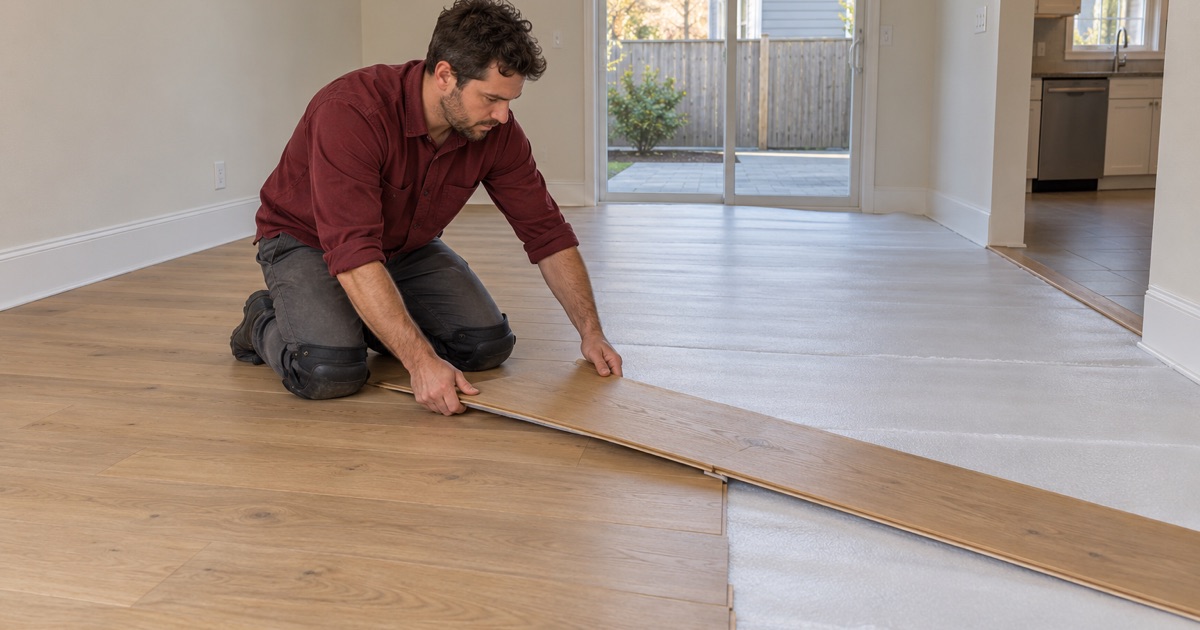
Glue-down installations suit concrete slabs, nail-down and staple-down suit plywood subfloors, and floating floors sit over an underlayment without being fastened to the subfloor. We follow the manufacturer’s instructions for the method, because the wrong one can void the warranty and leave a floor that moves or squeaks.
Acclimation and the Expansion Gap
Engineered boards still need to acclimate and still need room to move. We check moisture readings on the subfloor and the boards against the manufacturer’s guidelines, and leave the expansion gap at the walls that the boards need, hidden under baseboard or quarter round.
Finishing the Edges
Thresholds, reducers, stair nosing and quarter round are what make an installation look finished. We fit them carefully so the floor meets doorways, stairs and other flooring cleanly.
Repairs and Care for Engineered Floors
Replacing Damaged Boards
A gouged, water-stained or delaminated engineered board can usually be cut out and replaced without pulling up the whole room. We match the product as closely as possible, which is much easier when a spare box from the original order was kept.
Water Damage on Engineered Floors
Engineered floors resist humidity, but a leak from the unit upstairs or a burst pipe can still swell the core and lift the top layer. We find the source, dry and meter the floor, and replace only the boards that will not recover, documenting the damage room by room if an insurance claim is involved.
Recoating an Engineered Floor
When a prefinished floor turns dull, a screen and recoat can freshen it without touching the wear layer. We test how the factory finish accepts a new coat first, since some factory coatings need a specific preparation before a recoat will bond.
Day-to-day care matters as much as the finish. Felt pads under furniture, mats at exterior doors and a damp rather than wet mop keep grit and standing water off the surface, which is what wears through a factory finish fastest. We leave you the manufacturer’s care instructions with every installation so the warranty stays intact.
- 20+ Years on Wood Floors
- Itemized Written Estimates
- Old Pine and Oak Work